

Spring Lawn Checklist: Mowing and Fertilization Go Hand in Hand
April is the month everything clicks into gear. The grass is growing, the weather is cooperating, and homeowners across Short Pump and Glen Allen are finally back outside paying attention to their yards. It's also the month where the decisions you make — especially around mowing and fertilization — set the tone for how your lawn looks from now through September.
These two things don't have to be complicated, but they do have to work together. Here's how we think about the April lawn checklist and why mowing and fertilization are more connected than most people realize.
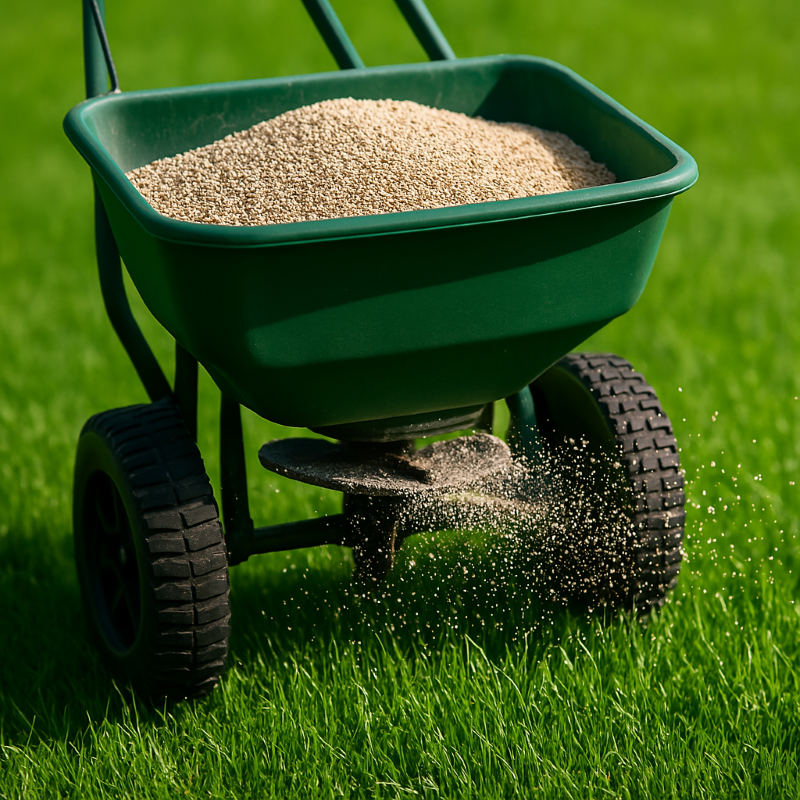
Spring fertilization timing is everything for Virginia lawns — get it right before the growth window closes.
Why April Is the Critical Window
For cool-season grasses like tall fescue — which is what most lawns in central Virginia are running — April is peak growth season. Soil temperatures are in the right range, days are getting longer, and the grass is actively pushing new growth both above and below ground.
This is the window when your lawn is most responsive to the things you do for it. Good mowing habits in April build a thicker, denser turf that naturally crowds out weeds. Timely fertilization in April fuels root development before the stress of summer sets in. Miss this window and you spend the rest of the season playing catch-up.
Mowing in April: Height and Frequency
The single most important mowing decision you'll make all year is your cutting height. For tall fescue lawns in central Virginia, we recommend three to three and a half inches throughout spring — and we don't deviate from that much even when the grass is growing fast.
The temptation in April is to cut it short and tidy because the lawn has been shaggy all winter. Resist that. Scalping your lawn in spring — cutting it below two and a half inches — puts immediate stress on the grass, exposes the soil to sunlight that weed seeds love, and weakens the root system right before summer heat arrives.
In terms of frequency, once a week is usually right for April in this area. If the grass is growing faster than that — which can happen in a warm, rainy April — mow more often rather than letting it get long and then cutting it down hard. The one-third rule applies: never remove more than a third of the blade height in a single cut.
Fertilization in April: What to Apply and When
April is a good time for a spring fertilizer application, but the details matter. We're looking for a balanced product — something with both nitrogen for top growth and phosphorus and potassium for root development. A granular slow-release fertilizer applied in early to mid-April gives the lawn a steady supply of nutrients through spring without the flush-and-crash effect you get from quick-release products.
Soil temperature is your timing guide. Once soil temps are consistently above 50 degrees — which in Glen Allen and Short Pump typically happens in late March to early April — the grass is ready to use what you put down. Apply too early and the nutrients sit in the soil or run off before the roots can access them.
One common mistake: applying too much. More fertilizer does not mean greener grass — it means more mowing, more stress on the plant, and an increased risk of burning or disease. Follow the label rates and lean toward the lower end if you're unsure.
For fertilization treatments, we work with a trusted local partner to make sure your lawn gets exactly what it needs — the right product, the right timing, and the right application rate for your specific turf.
The Connection Between the Two
Here's why mowing and fertilization have to be thought about together: fertilizer pushes growth, and growth means more frequent mowing. If you fertilize in April and then let the grass get long between cuts, you end up removing too much blade at once, which stresses the lawn and undoes some of the benefit of the fertilizer.
Conversely, if you're mowing regularly at the right height, the lawn is better able to use the nutrients you're applying. The canopy stays dense, the roots stay deep, and the grass builds the kind of resilience that carries it through summer.
The combination of consistent mowing at the right height and timely fertilization in April is the single biggest factor in how lawns look from June through August. It's not dramatic or flashy — it's just doing the basics well, week after week.
What This Looks Like in Practice
For our clients across Glen Allen, Short Pump, Twin Hickory, and Wyndham, April looks like this: weekly mowing at three to three and a half inches, a slow-release fertilizer application in early to mid-April, and consistent edging and trimming to keep the property looking sharp. We're also keeping an eye on any thin spots or bare patches from winter and addressing those before weeds move in.
It's not complicated, but it does require showing up consistently. That's what we do.
Getting on the Schedule
If you're not already on a regular lawn maintenance schedule for 2026, now is the time. Our spring schedule fills up fast, and the clients who lock in early are the ones who get consistent service all season instead of scrambling for availability in June.
We're currently accepting new clients in Glen Allen, Short Pump, Twin Hickory, and Wyndham. Give us a call at 804-572-9488 and we'll get you set up before the busy season hits.
About the Author
Matt Brown is the owner of ELM Lawn Care, a residential lawn care company serving Glen Allen, Short Pump, Twin Hickory, and Wyndham, VA. Matt started ELM with a simple goal: deliver consistent, professional lawn maintenance that homeowners can actually count on. When he's not on the mower, he's usually spending time with his family or planning the next season. Licensed and insured — call 804-572-9488 to get on the schedule.