

Is Your Lawn Ready for Spring? Here's What to Do First
Every March, I show up to yards across Glen Allen, Short Pump, and Twin Hickory and see the same thing: lawns that wintered okay but aren't quite ready for what's coming. The grass is starting to green up, homeowners are eager to get outside, and the instinct is to jump straight into mowing and fertilizing. But rushing that process is one of the most common mistakes I see, and it can set a lawn back for months.
Spring lawn prep isn't complicated. But the order matters. Here's what we actually do — and in what sequence — to get lawns in central Virginia ready for a strong growing season.
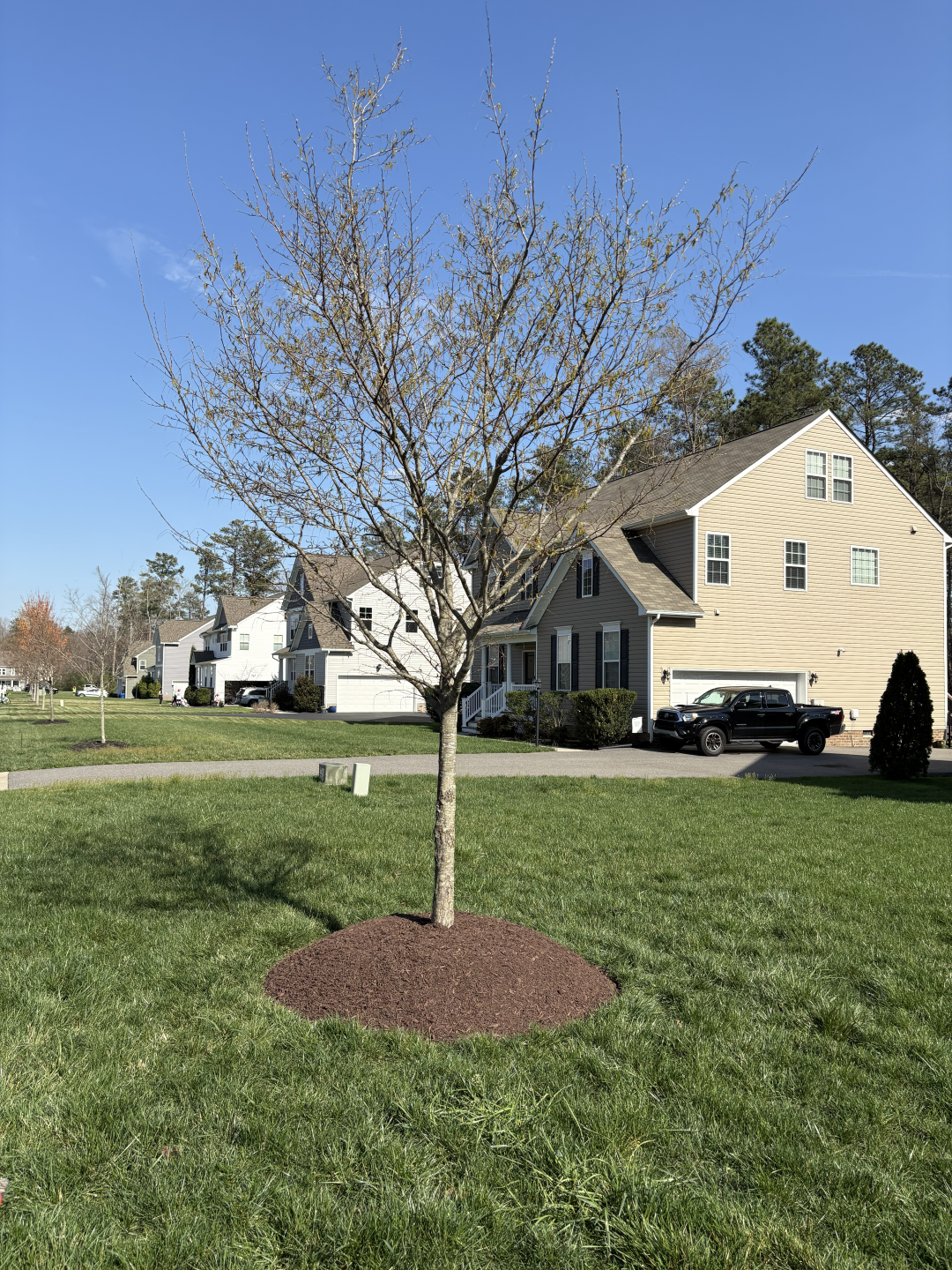
Spring is here and your lawn is waking up — but is it ready?
Start With a Good Look Around
Before anything else, walk your lawn slowly and look for problems that winter may have left behind. We're talking about things like snow mold, compacted bare spots from foot traffic, areas where thatch has built up, and any low spots that are holding water after rain.
In central Virginia, we don't always get harsh winters, but even a mild one can leave cool-season grasses like tall fescue looking thin or uneven coming out of dormancy. Take note of where the weak spots are. Those areas will need extra attention later in spring.
Hold Off on the First Mow Until the Grass Is Actually Growing
This is a big one. A lot of homeowners fire up the mower the first warm weekend in March, even when the grass isn't really growing yet — it just looks a little shaggy. Mowing a lawn that isn't actively growing stresses the plant and doesn't actually do much for appearance.
The rule I use: wait until you've had to mow it once and it grew back noticeably within a week. That's your signal that the lawn is in active growth mode and ready for a regular schedule. In Glen Allen, that usually happens somewhere between late March and mid-April depending on the year.
When you do start mowing, keep the height up. Three to three and a half inches is a good starting point for tall fescue. Cutting too short too early weakens the root system heading into the heat of summer.
Clean Up Debris Before You Do Anything Else
Leaves, sticks, and matted organic matter that sat on the lawn all winter can smother grass and create the perfect environment for fungal disease. Before you fertilize or mow, do a thorough cleanup pass.
If you had leaves sitting on the lawn through February, look closely at those areas. Matted leaves block sunlight and air circulation, and sometimes you'll find patches of grass underneath that are yellow or thin. Those spots need airflow and light before they'll recover.
Wait on Fertilizer Until the Lawn Is Ready for It
For cool-season grasses in central Virginia, early spring fertilization is effective — but timing matters. Applying nitrogen too early, before the grass is actively growing, can push excessive top growth at the expense of root development. It can also increase the risk of disease.
We typically aim for late March to mid-April for the first fertilization of the year, once soil temperatures are consistently above 50 degrees and the grass is clearly in active growth. A soil thermometer is a $15 tool that takes the guesswork out of it.
A light application of a balanced fertilizer is usually the right move at this stage. Heavy feeding in early spring isn't necessary and can cause more problems than it solves.
Address Bare and Thin Spots Now, Not Later
If you've got bare patches or thin areas from last year, early spring is a decent time to overseed them — but fall is actually the best window for major overseeding in Virginia. In spring, you're racing against the clock before summer heat arrives and makes it hard for new seed to establish.
For small patches, a light overseeding with quality tall fescue seed can work well in March and April if you keep the soil consistently moist. Don't bother with pre-emergent weed control in areas you plan to seed, though — it will prevent the grass seed from germinating too.
Get on a Schedule Before You Need One
The lawns that look the best in July aren't the ones that got the most attention in July. They're the ones that were set up right in March and April and maintained consistently from there.
If you don't have a regular mowing and maintenance schedule lined up yet, now is the time to get one. By May, most lawn care crews in Glen Allen and Short Pump have full schedules, and you end up waiting or going with whoever has an opening instead of whoever does the best work.
We're accepting new clients for the 2026 season right now. If you want your lawn on the schedule before the spring rush peaks, give us a call at 804-572-9488. We serve Glen Allen, Short Pump, Twin Hickory, and Wyndham.
The Bottom Line
Spring lawn prep isn't about doing everything at once. It's about doing the right things in the right order — cleaning up first, giving the lawn time to wake up, mowing at the right height, and fertilizing at the right moment. Lawns that get this foundation right in March and April are the ones that sail through summer looking healthy.
If you're not sure where your lawn stands or what it needs heading into spring, we're happy to take a look. That's part of what we do.
About the Author
Matt Brown is the owner of ELM Lawn Care, a residential lawn care company serving Glen Allen, Short Pump, Twin Hickory, and Wyndham, VA. Matt started ELM with a simple goal: deliver consistent, professional lawn maintenance that homeowners can actually count on. When he's not on the mower, he's usually spending time with his family or planning the next season. Licensed and insured — call 804-572-9488 to get on the schedule.