

How to Prep Your Lawn for the Virginia Summer Heat Before It Hits
May feels like a great lawn month, and it is. The grass is green, temperatures are comfortable, and everything looks healthy. But May is also when the clock starts ticking. Virginia summers are tough on cool-season lawns, and the decisions you make in May — about mowing, watering, and fertilization — have a direct impact on how your lawn handles the heat in July and August.
The best time to prepare for summer stress is before summer arrives. Here's what that looks like.
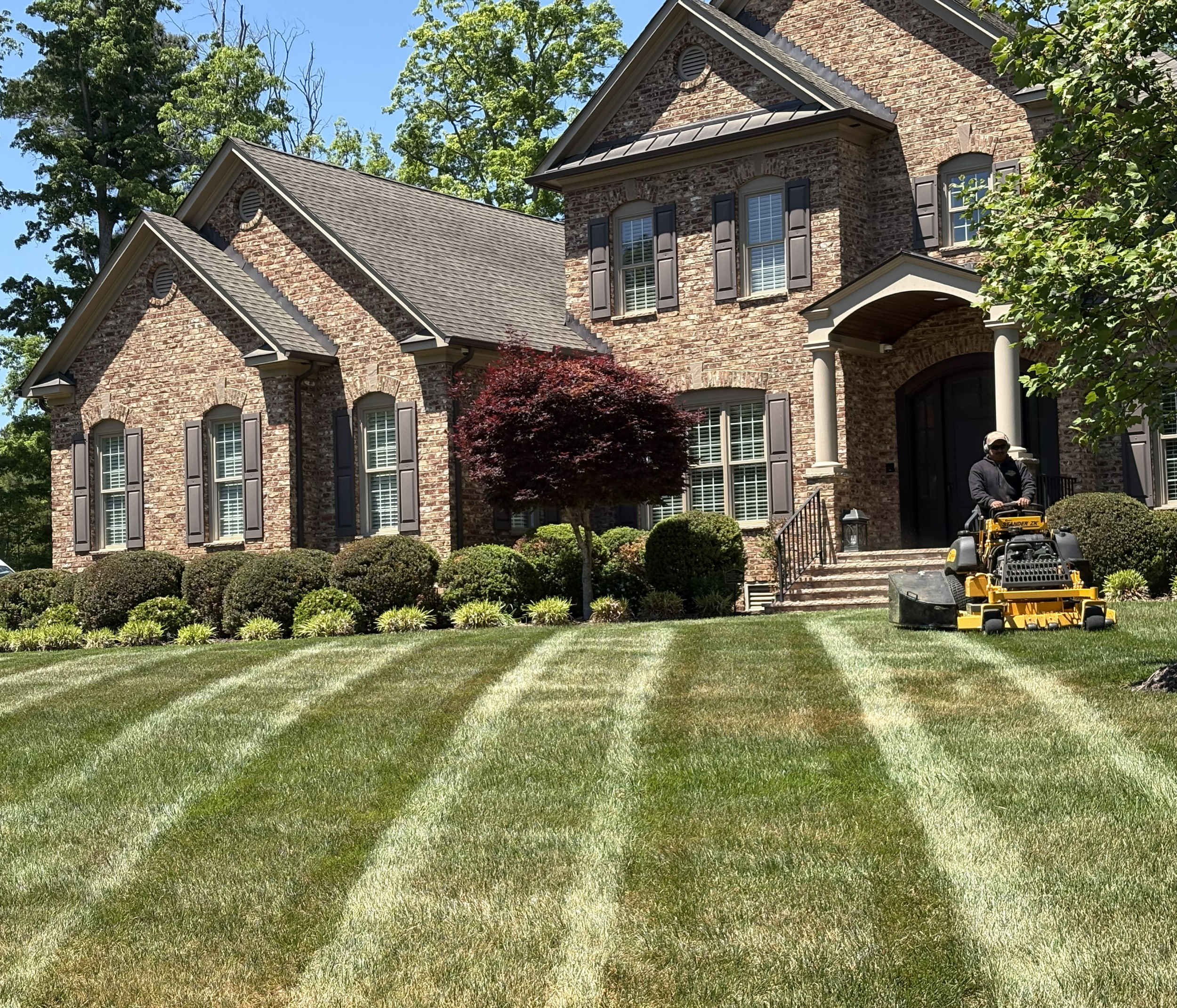
Understand What You're Preparing For
Tall fescue, which is the dominant grass type for most residential lawns in the Glen Allen and Short Pump area, is a cool-season grass. It thrives in the 60s and 70s and starts to struggle when temperatures consistently hit the 80s and 90s. In central Virginia, that usually means June through August is a period of heat stress, and July in particular can be brutal.
During peak heat, cool-season grasses naturally slow down or go semi-dormant. They're not dying — they're surviving. The goal of May prep is to go into that period with a lawn that's as healthy and resilient as possible so it comes out the other side looking good.
Start Raising Your Mowing Height
If you've been mowing at three inches through spring, it's time to start thinking about bumping that up to three and a half to four inches as we head into June. Taller grass shades the soil surface, which keeps soil temperatures lower and reduces moisture evaporation. It also means the root system has more leaf area to support it, which matters when water becomes scarce.
Make the transition gradually — don't jump from three inches to four inches in a single cut. Raise the deck a notch every couple of weeks and let the lawn adjust. By the time July arrives, you want to be at the taller end of the range.
Get Your Watering Habits Right Now
This is probably the most impactful thing you can do in May to prepare for summer. How you water your lawn — the frequency and depth — directly determines how deep your grass roots grow, and deep roots are what allow a lawn to survive dry stretches.
The right approach is deep and infrequent. One inch of water per week, applied in one or two sessions rather than a little every day. Shallow, frequent watering keeps roots near the surface where they're vulnerable to heat and drought. Deep, infrequent watering forces roots downward in search of moisture — and that depth is what saves a lawn in July.
If you have an irrigation system, check your coverage now. Look for dry spots, clogged heads, or areas that are getting too much overlap. A poorly calibrated irrigation system is one of the most common causes of uneven lawns in the summer. Better to identify and fix those issues in May than to chase brown patches in August.
Be Careful With Late Spring Fertilization
If you applied a spring fertilizer in April, you may not need another application before summer. Over-fertilizing cool-season grasses heading into summer pushes leafy top growth at the expense of the root system — which is exactly the opposite of what you want going into heat stress season.
If you do apply fertilizer in May, keep it light and use a product with a good ratio of slow-release nitrogen. Avoid quick-release fertilizers in late spring entirely. The goal right now is to build a root system, not push a growth flush that the plant can't sustain through July.
Address Weeds Before They Establish
May is also when broadleaf weeds and summer annuals really get going. Dandelions may already be familiar, but May brings clover, plantain, spurge, and crabgrass into the picture. The best weed control strategy is a dense, healthy lawn — weeds struggle to compete with thick turf. But if your lawn has thin spots, those areas are particularly vulnerable.
Pre-emergent herbicides for crabgrass are typically applied in early spring before soil temps hit 55 degrees — so if that window has already passed, post-emergent treatments are your option for any crabgrass that's already germinating. Spot-treating broadleaf weeds now, while they're young, is far more effective than trying to address a full weed population in July.
The Mindset Shift for Summer
One thing I tell clients every year: the goal in summer is not to make the lawn look better than it does in spring. The goal is to protect it so it comes out of summer in good shape and rebounds strong in fall. A lawn that looks decent in August and comes back thick in September is a success. A lawn that gets pushed hard through summer and struggles into October is not.
May is when you make that choice — through your mowing height, your watering habits, and your fertilization decisions.
If you're not sure whether your lawn is headed into summer in good shape, we're happy to take a look. We serve Glen Allen, Short Pump, Twin Hickory, and Wyndham, and we're always glad to talk through what a lawn needs at any point in the season. Give us a call at 804-572-9488.
About the Author
Matt Brown is the owner of ELM Lawn Care, a residential lawn care company serving Glen Allen, Short Pump, Twin Hickory, and Wyndham, VA. Matt started ELM with a simple goal: deliver consistent, professional lawn maintenance that homeowners can actually count on. When he's not on the mower, he's usually spending time with his family or planning the next season. ELM Lawn Care is licensed and insured — call 804-572-9488 to get on the schedule.