

Drought Survival Guide: Keeping Your Lawn Alive When It Stops Raining
There's a stretch every summer in central Virginia — usually somewhere between late June and mid-August — where the rain just stops. Temperatures are in the 90s, the ground gets hard, and lawns that looked great in May start showing stress fast. Brown patches appear, the grass loses its springy feel underfoot, and homeowners start wondering what they did wrong.
Most of the time, they didn't do anything wrong. Summer drought stress is normal for cool-season lawns in Virginia. The question is how you respond to it — and whether the decisions you made in spring set your lawn up to survive it.
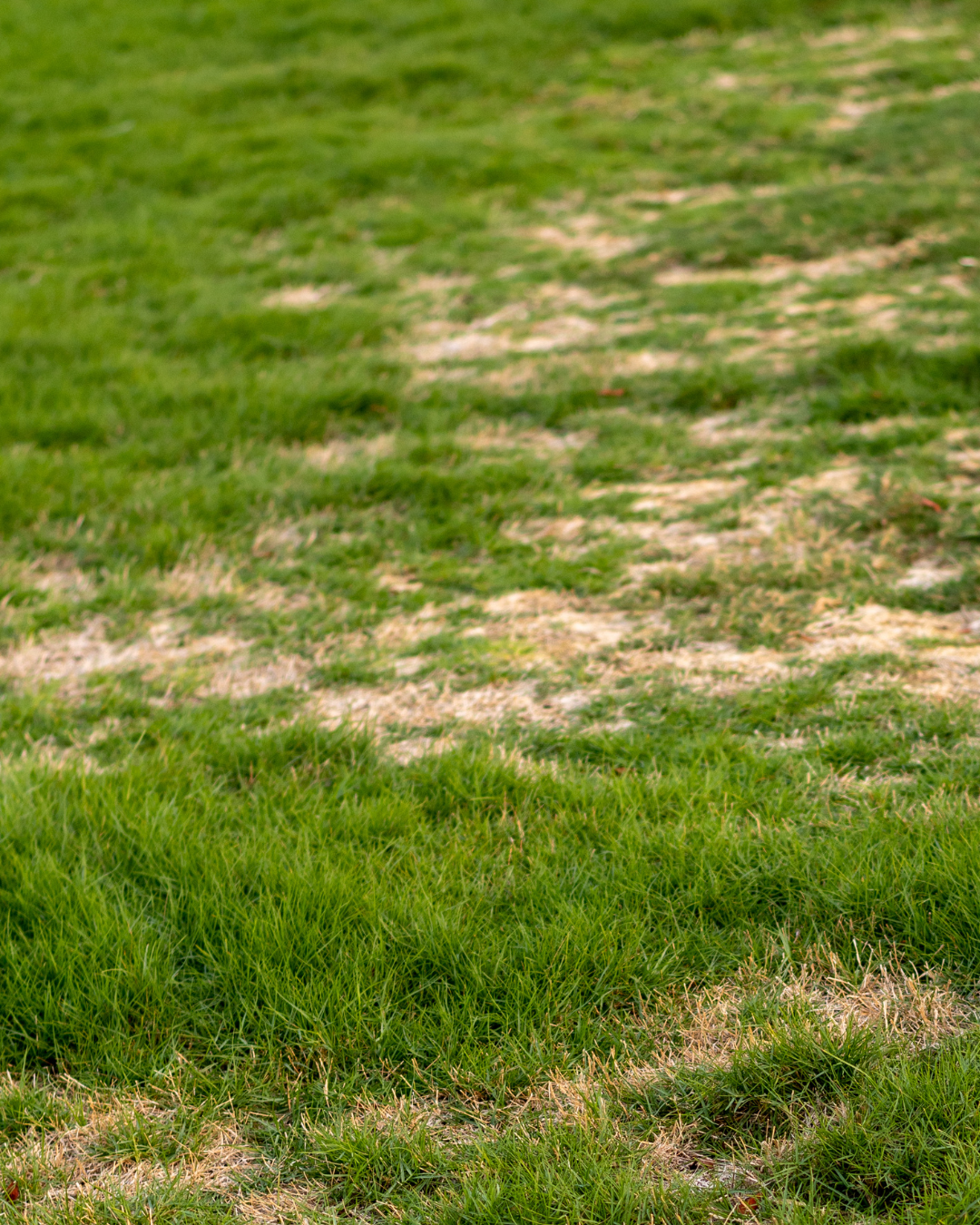
Drought stress on a Virginia lawn — thin patches and exposed soil are early signs your turf needs attention before summer heat peaks.
Know the Difference Between Dormancy and Damage
When cool-season grass — tall fescue in most Glen Allen and Short Pump yards — gets hit with prolonged heat and drought, it does something smart: it goes dormant. The blades turn brown or tan, growth stops, and the plant puts all of its energy into keeping the crown and roots alive.
This is a survival mechanism, not a death sentence. A dormant lawn that gets water and cooler temperatures will come back. A lawn that gets pushed hard during drought — over-fertilized, over-mowed, watered incorrectly — can suffer real damage that requires overseeding to repair.
The first rule of drought survival is: don't panic. Brown grass in July doesn't always mean dead grass. Learning to tell the difference is important before you take any action.
The Right Way to Water During a Drought
If you're going to water during a summer drought, do it correctly. Watering a lawn that's trying to go dormant a little every day can actually do more harm than good — it keeps the grass out of full dormancy without giving it enough water to truly thrive, creating a state of chronic stress.
If you want to maintain active growth, your irrigation system or hose needs to deliver about one to one and a half inches of water per week, applied in one or two deep sessions early in the morning. Deep watering penetrates six to eight inches into the soil, where the roots can access it. Shallow watering just wets the surface and evaporates.
If you can't commit to full watering — because of water restrictions, cost, or system limitations — it's actually better to let the lawn go fully dormant than to water lightly and inconsistently. A fully dormant lawn is in a stable survival state. A half-dormant lawn under inconsistent watering stress is not.
What Not to Do During a Drought
There are a few common mistakes that turn manageable summer stress into real lawn damage, and they come from good intentions. Here's what to avoid:
Don't fertilize. Applying nitrogen to a stressed lawn in summer pushes growth the plant can't sustain without adequate water. It increases water demand at exactly the wrong time and can lead to burning or disease.
Don't mow too short. Heat-stressed grass needs every inch of blade it has to photosynthesize and shade the crown. Keep the mower deck at the highest setting — three and a half to four inches — and don't mow at all if the lawn is fully dormant.
Don't mow when it's dry and hot. Mowing adds stress. If you do need to cut, do it in the early morning when temperatures are lower, and make sure your blades are sharp. Dull blades tear the grass rather than cutting it cleanly, which increases moisture loss and disease risk.
Don't pull out dormant grass. It looks dead, but it's probably not. Give it some water and cooler temperatures before you make any decisions about repair or overseeding.
How to Help a Lawn Recover After a Drought
When rain returns or temperatures drop — typically in September in central Virginia — dormant cool-season lawns come back faster than most homeowners expect. The crown and root system have been preserved, and with moisture and cooler temperatures, new growth begins quickly.
To help the recovery along: resume normal mowing once the grass is actively growing again, apply a fall fertilizer in September to support recovery and root development, and consider overseeding any areas that didn't come back fully. Fall is by far the best window for overseeding in Virginia — soil is warm, temps are cooler, and rain is more reliable.
The lawns that recover best from drought are the ones with deep root systems built through good spring and early summer care. That's the real drought survival strategy — not what you do in July, but what you did in April and May.
When to Call for Help
If your lawn has significant bare patches, areas that haven't recovered after rain returns, or spots that look damaged rather than just dormant, it may be time to bring someone in to assess it. Sometimes drought stress reveals underlying issues — soil compaction, drainage problems, or turf disease — that need to be addressed before the lawn can recover.
We work with lawns across Glen Allen, Short Pump, Twin Hickory, and Wyndham every summer and see all of this firsthand. If your lawn is struggling and you're not sure what it needs, give us a call at 804-572-9488. We're glad to take a look.
About the Author
Matt Brown is the owner of ELM Lawn Care, a residential lawn care company serving Glen Allen, Short Pump, Twin Hickory, and Wyndham, VA. Matt started ELM with a simple goal: deliver consistent, professional lawn maintenance that homeowners can actually count on. When he's not on the mower, he's usually spending time with his family or planning the next season. ELM Lawn Care is licensed and insured — call 804-572-9488 to get on the schedule.